
Social and Cultural Codes of the Child Image in Advertising: The Cases of Şölen, Eti and Torku
Article Sidebar
Main Article Content
Abstract
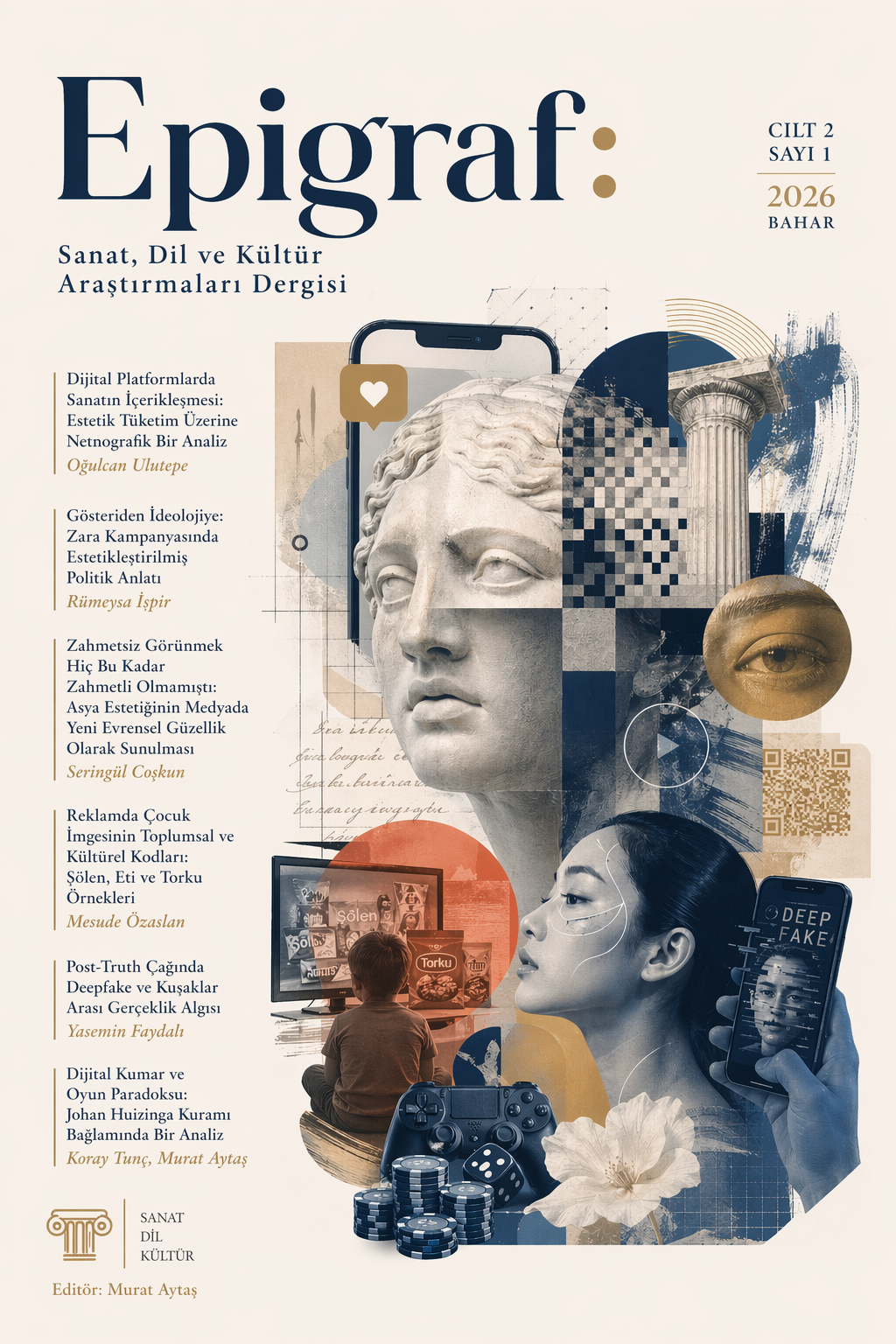
This study aims to examine how the image of the child is used in advertisements, for what purposes, and within which ideological frameworks, through a post-structuralist approach. In the application section of the study, chocolate advertisements produced in Türkiye for the brands Şölen, Eti, and Torku were selected via random sampling and evaluated using semiotic analysis. In the analysis, the functions assumed by the child image in advertisements, the cultural and emotional meanings it conveys, and the gender codes it reproduces were examined. According to the research, the child image in advertisements serves not only as an element of attraction for the target audience but also as a cultural symbol that evokes values such as family, tradition, and social solidarity. In the Şölen advertisement, the child is depicted as a symbol of the culture of national and religious holidays, emphasizing the values of sharing and happiness. In the Eti Petito advertisement, while an emotional meaning is attributed to the product through the representation of children’s innocence and joy, the sense of family bonding is emphasized through the grandfather–grandchild relationship. In Torku’s Miniki advertisement, the child image is associated with themes of health, trust, and family unity; at the same time, gender roles are reproduced at an early age through the color codes of blue and pink.
Article Details

This work is licensed under a Creative Commons Attribution 4.0 International License.
References
Akerson, F. E. (2005). Göstergebilime giriş. İstanbul: Multilingual.
Barthes, R. (1972). Mythologies. New York: Hill and Wang.
Barthes, R. (2005). Göstergebilimsel serüven (M.-S. Rifat, Çev.). İstanbul: Yapı Kredi Yayınları.
Beard, D., & Gloag, K. (2005). Post-yapısalcılık (Ö. C. Satır, Çev.). İnsan ve Toplum Bilimleri Araştırmaları Dergisi, 4(3), 787–790.
Belsey, C. (2013). Postyapısalcılık (N. Örge, Çev.). Ankara: Dost Kitabevi.
Çulha, O. (2011). Göstergebilim tekniği kullanılarak Kanada fotoğraflarının incelenmesi. ZKÜ Sosyal Bilimler Dergisi, 7(13), 409–424.
Değirmencioğlu, S. M. (2009). Medyada çocuk emeği ve reklamların çocuk işçileri. [Makale]. Academia.edu.
Elden, M., & Ulukök, Ö. (2006). Çocuklara yönelik reklamlarda denetim ve etik. Küresel İletişim Dergisi, 2, 1–23.
Ezmeci, F., Çoban Söylemez, E. T., Akgül, E., & Akman, B. (2017). Çocukların yer aldığı reklamların çocuklara ve yetişkinlere verilen mesajlar, roller ve cinsiyete yönelik ayrımcılık unsurları açısından incelenmesi. Galatasaray Üniversitesi İleti-ş-im Dergisi, 26, 247–279. https://doi.org/10.16878/gsuilet.324859
Guiraud, P. (1994). Göstergebilim (M. Yalçın, Çev.). Ankara: İmge Kitabevi.
Günay, D. (2002). Metin bilgisi. İstanbul: Multilingual.
Günay, D. (2002). Göstergebilim ve anlamın üretimi. Dilbilim Araştırmaları Dergisi, 12(1), 45–62.
Knafo, D. (1991). What's in a name? Psychoanalytic considerations on children of famous parents. Psychoanalytic Psychology, 5(3), 263–281.
Köksal, M. H. (2007). Consumer behaviour and preferences regarding children’s clothing in Turkey. Journal of Fashion Marketing and Management, 11(1), 69–81.
Kuruoğlu, H., & Soygüder, Ş. (2009). Televizyon reklamlarında çocuk: Türkiye örneği. http://akademikstok.com/televizyon-reklamlarinda-cocuk-turkiye-ornegi-oku-276.html (Erişim tarihi: 10 Eylül 2015).
Küçükerdoğan, R. (2011). Reklam nasıl çözümlenir. İstanbul: Beta Yayıncılık.
Maheshwari, S. (2009). Children of famous parents: An exploratory study. International Journal of Social Sciences, 4(1), 44–53.
Özkar, M., & Aytaş, M. (2021). Okul Öncesi Çocuklara Yönelik Hazırlanan Çizgi Filmlerde Toplumsal Cinsiyet Rollerinin Yansıtılması: Rafadan Tayfa ve Canım Kardeşim. Kurgu, 29(1), 37-58.
Rapport, L. J., & Meleen, M. (1998). Childhood celebrity, parental attachment, and adult adjustment: The Young Performers Study. Journal of Personality Assessment, 70(3), 484–505.
Seel, N. M. (1999). Educational semiotics: School learning reconsidered. Journal of Structural Learning and Intelligent Systems, 14(1), 11–28.
Sözen, E. (1999). Söylem. İstanbul: Paradigma Yayınları.
Way, K. (1998). At what price fame: A comparative analysis of how men and women experience fame. Dissertation Abstracts International Section A: Humanities and Social Sciences, 58(7-A), 2869.
Weber, R. (2009). Protection of children in competitive sport: Some critical questions for London 2012. International Review for the Sociology of Sport, 44(1), 55–69.
Williamson, J. (2001). Reklamların dili: Reklamlarda anlam ve ideoloji (A. Fethi, Çev.). Ankara: Ütopya Yayınevi.