
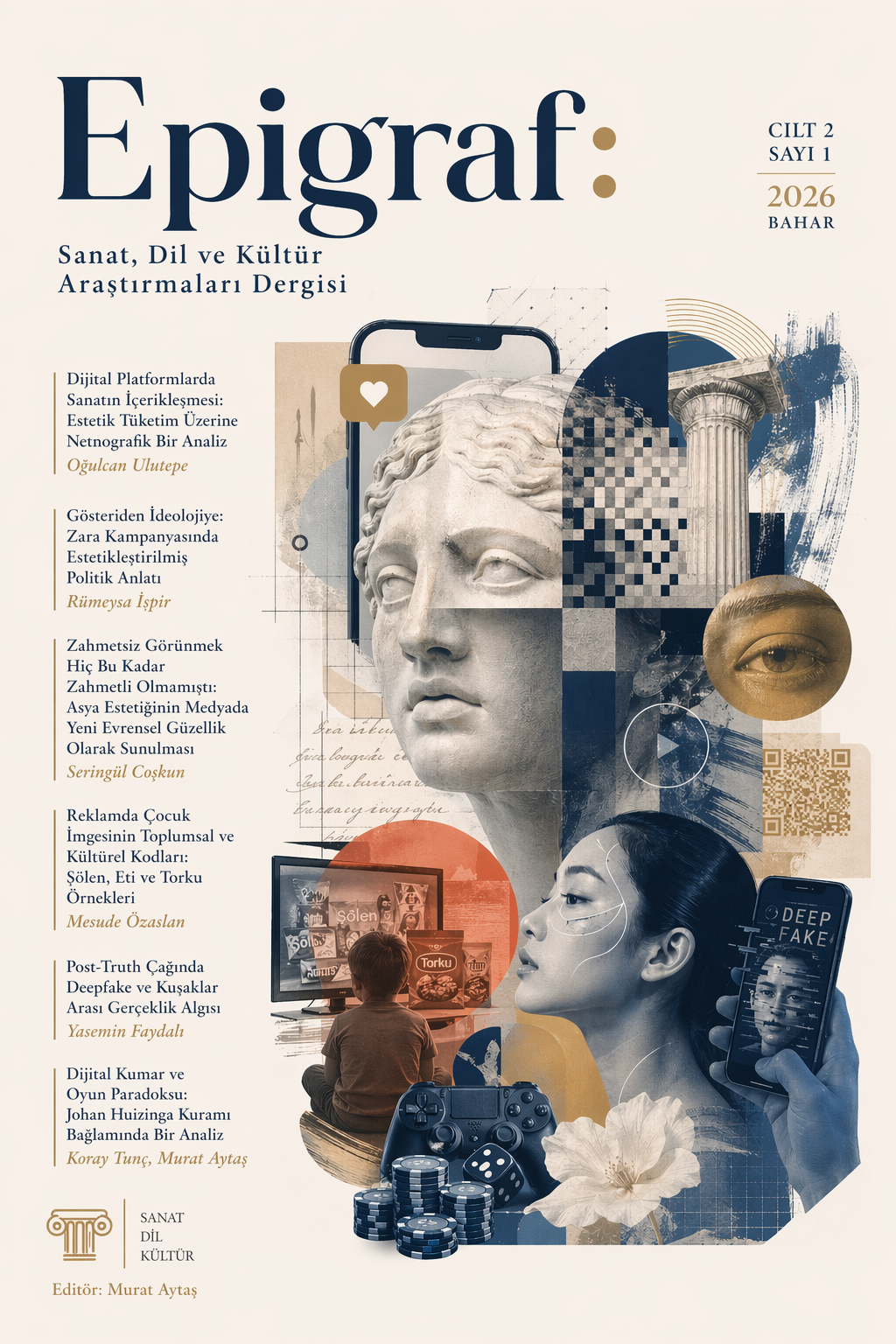
Digital Gambling and the Paradox of Play: An Analysis within the Framework of Johan Huizinga’s Theory
Article Sidebar
Main Article Content
Abstract
This study aims to examine the transformation of digital gambling platforms, which are now continuously accessible on smartphones and computers, within the framework of Johan Huizinga’s classical theory of play. The main research problem focuses on how these platforms, through the rhetoric of play and behavioral design strategies, influence individuals and erode the protective boundaries Huizinga conceptualized as the “magic circle,” thereby transforming into structures that foster addictive behaviors. The research is designed within a qualitative research approach and is based on semi-structured in-depth interviews with 12 participants with experience in online gambling, selected through purposive sampling. The collected data were analyzed using thematic analysis. The findings indicate that participant experiences are structured around four main themes: initial motivations, emotional cycles associated with winning and losing, the manipulative effects of platform design, and strategies for coping with loss of control. When evaluated within Huizinga’s theoretical framework, the findings reveal that digital gambling produces a structural paradox. While these platforms replicate the formal elements and language of play, they simultaneously violate its core principles, including voluntariness, boundedness, and the absence of material interest. Continuous accessibility blurs the distinction between play and everyday life; behavioral design techniques weaken individual autonomy; and the use of real money undermines the non-material nature of play.
Article Details

This work is licensed under a Creative Commons Attribution 4.0 International License.